
This product is available in various packaging sizes.
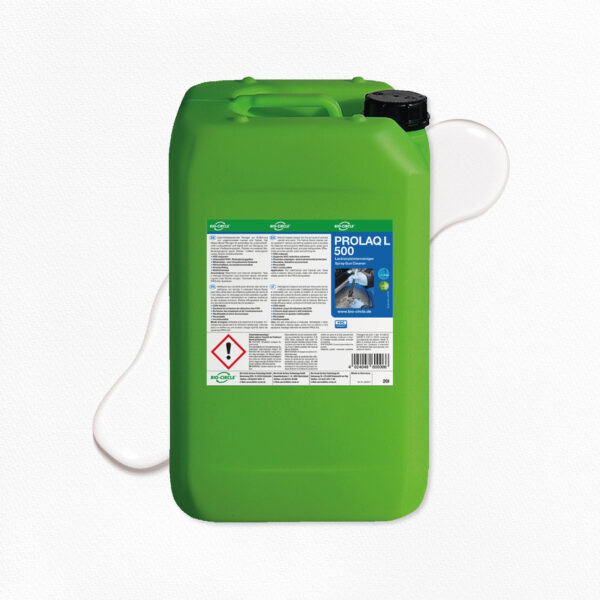
PROLAQ L 500 - Jerrycan 20 l
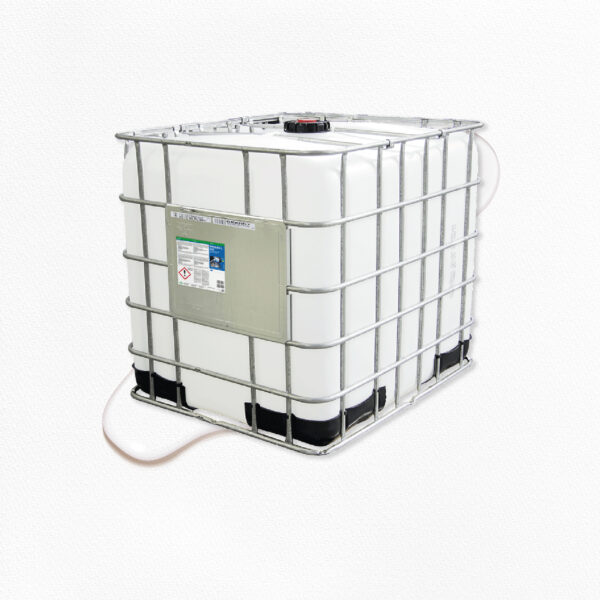
PROLAQ L 500 - IBC 1000 l
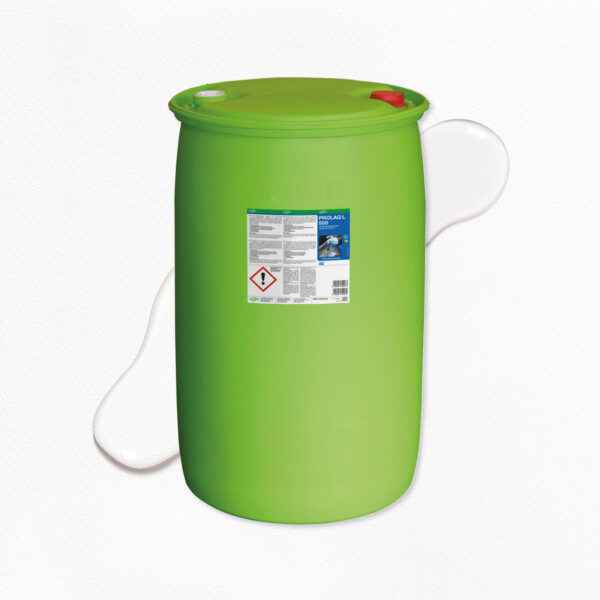
PROLAQ L 500 - Plastic Barrel 200 l
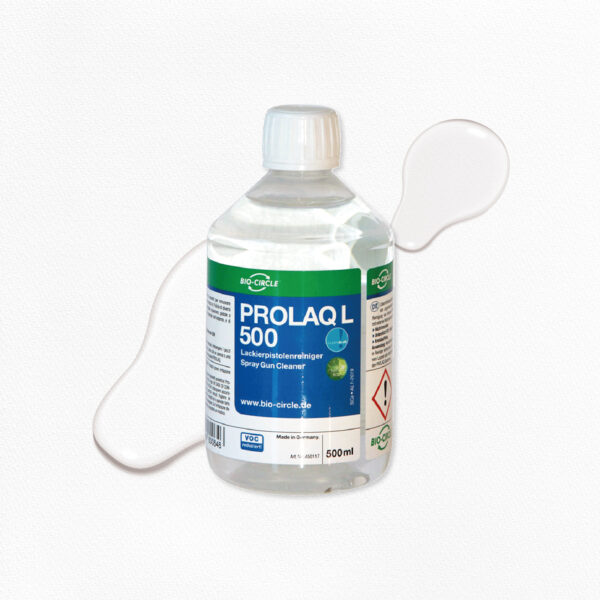
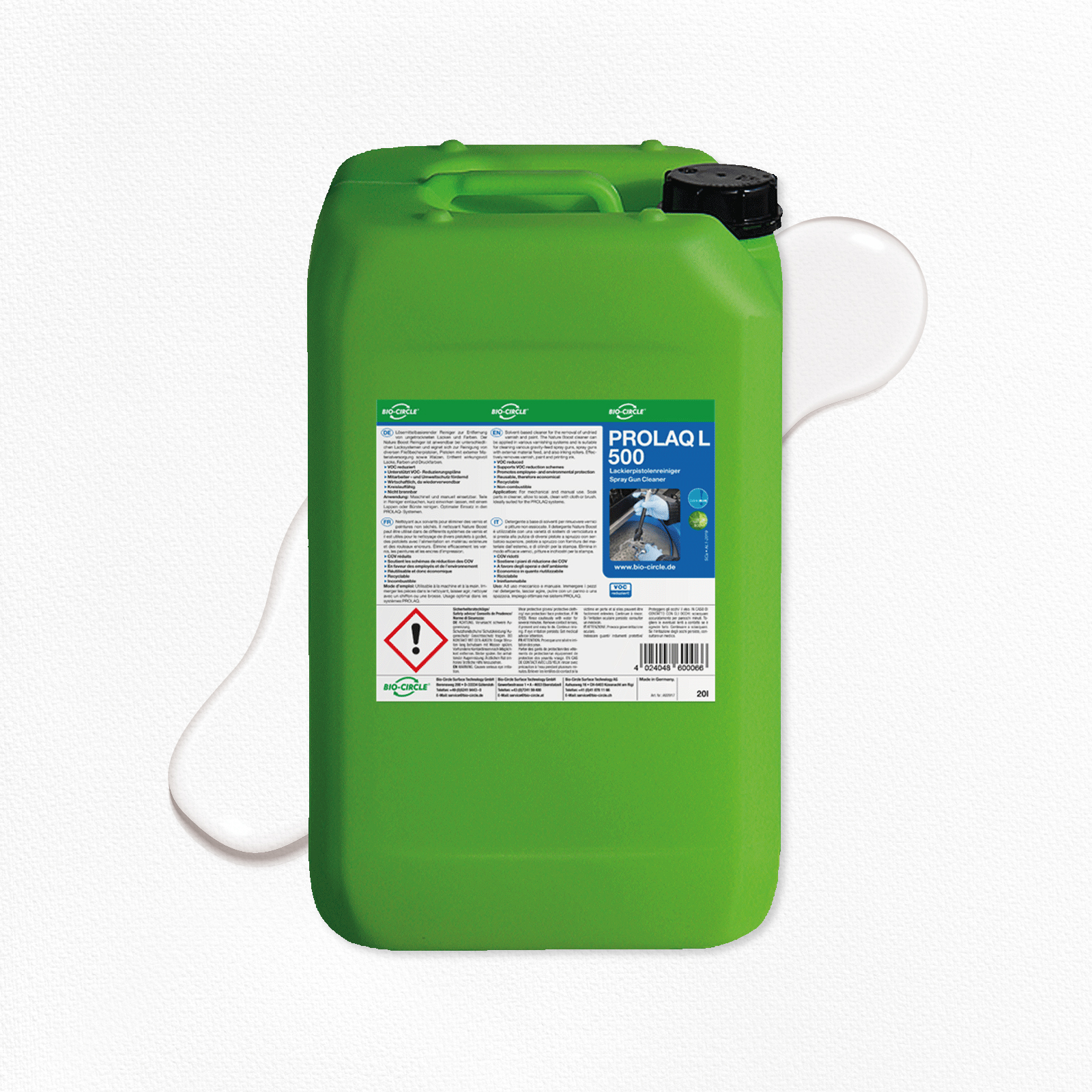
PROLAQ L 500 is a powerful paint remover that has been specially developed for the removal of water-based and solvent-based paints and varnishes. With a low VOC content, it offers an environmentally friendly alternative to nitrocellulose thinner, while also protecting employee health.
This product is available in various packaging sizes.
Description
PROLAQ L 500 is ideal for the thorough cleaning of paint application tools, paint pumps, printing rollers and other components that come into contact with solvent-based and water-based paints. Its consistently high cleaning performance and non-flammable properties make it a safe and efficient choice for various industrial applications.
In combination with the PROLAQ Compact and PROLAQ Auto cleaning systems, PROLAQ L 500 achieves optimum results. The closed-loop use of the cleaning agent significantly extends its service life, resulting in 5 to 10 times more reusability.
| Manual-automatic |
automatic, manual |
|---|---|
| Types of contamination |
Color & Coatings |
| Material |
Aluminum, Metals, Non-ferrous metals, Steel / Stainless Steel |
| Machanics |
Automatic Gun Stripping, Manual Parts Cleaning Devices |
| Cleaner base |
solvent, water-free |
| Seal of Approval |
Ready-to-use, VOC Reduced |
| VOC |
VOC-reduced |
| Water hazard class |
1 |
| Saftey advice |
Eye Irrit. 2 |
| Labeling |
lightly labeled |

The red-colored drain valve is specially designed for 20-liter and 30-liter canisters and allows for...
excl. 19% VAT
zzgl. Versandkosten

The double key for 5-30 liter canisters allows for easy opening and closing in accordance...
excl. 19% VAT
zzgl. Versandkosten

PROLAQ disposable gloves in size XL and gray color offer reliable protection for efficient spray...
excl. 19% VAT
zzgl. Versandkosten

The Overflow Plug with integrated filter insert is the perfect accessory for your parts washer....
excl. 19% VAT
zzgl. Versandkosten

The bung wrench is a tool for opening and closing Bio-Circle 200 l barrels.
excl. 19% VAT
zzgl. Versandkosten

The drain valve for 200 l barrels allows for easy removal of liquids, including the...
excl. 19% VAT
zzgl. Versandkosten
 Other container sizes available
UNO S F is a versatile, low-foaming intensive cleaner from the UNO range that is...

excl. VAT
zzgl. Versandkosten
Inhalt: 0,5 Liter – 1000 Liter
23,70 €28,20 € / Liter
 Other container sizes available
Hair Remover Drain-Free is a powerful, alkaline drain cleaner that has been specially developed to...
excl. VAT
zzgl. Versandkosten
Inhalt: 1 Liter – 20 Liter
16,05 €19,10 € / Liter
 Other package sizes available
A powerful machine cleaning agent for the highest demands, which effortlessly removes even the most...
excl. VAT
zzgl. Versandkosten
Inhalt: 20 Liter – 1000 Liter
12,75 €15,17 € / Liter
 Other package sizes available
Multi Clean is a powerful all-rounder that effortlessly removes grease, oil, resin and dirt from...
excl. VAT
zzgl. Versandkosten
Inhalt: 1 Liter – 200 Liter
16,70 €19,87 € / Liter
 Other container sizes available
FOR CLEAN F is a low-foaming, safe and cost-effective cleaning agent that can be used...
excl. VAT
zzgl. Versandkosten
Inhalt: 0,5 Liter – 1000 Liter
24,10 €28,68 € / Liter
 Other container sizes available
The CB 100 Alu cleaning and degreasing agent is the ideal solution for thorough cleaning...
excl. VAT
zzgl. Versandkosten
Inhalt: 20 Liter – 1000 Liter
8,15 €9,70 € / Liter
 Other package sizes available
Limescale Barracuda is a powerful cleaning agent with active foam that is particularly effective against...
excl. VAT
zzgl. Versandkosten
Inhalt: 0,5 Liter – 200 Liter
23,70 €28,20 € / Liter
 Other packaging sizes available
FOR CLEAN V is a viscous, safe and cost-effective cleaning agent specially designed for manual...
excl. VAT
zzgl. Versandkosten
Inhalt: 0,5 Liter – 1000 Liter
24,10 €28,68 € / Liter
 Other container sizes available
UNO W is a water-based, alkaline workshop cleaner from the UNO range that is suitable...
excl. VAT
zzgl. Versandkosten
Inhalt: 1 Liter – 1000 Liter
13,30 €15,83 € / Liter
 Other container sizes available
Stripper Gel is a highly viscous cleaning gel specially developed for the removal of coatings,...
excl. VAT
zzgl. Versandkosten
Inhalt: 5 kg – 20 kg
22,95 €27,31 € / kg

Rubbel-Dubbel are damp cleaning wipes, ideal for manual, waterless cleaning in industry, trade and leisure....
excl. 19% VAT
zzgl. Versandkosten
Inhalt: 90 VE
0,36 €0,43 € / VE
 Other container sizes available
The urine odour remover ensures hygienic cleanliness and reliably eliminates unpleasant urine- and toilet odours....
excl. VAT
zzgl. Versandkosten
Inhalt: 0,5 Liter – 20 Liter
10,90 €12,97 € / Liter
 Other package sizes available
NSF-certified all-purpose cleaner for the food industry ✔ Removes limescale, urine scale, rust, tarnish, and...
excl. VAT
zzgl. Versandkosten
Inhalt: 0,5 Liter – 20 Liter
24,20 €28,80 € / Liter
 Other container sizes available
Defoamer HT is a highly effective, silicone-free defoamer specially developed for water-based Bio-Circle cleaning agents....
excl. VAT
zzgl. Versandkosten
Inhalt: 10 Liter – 20 Liter
25,80 €30,70 € / Liter
 Other container sizes available
POWER CLEANER 300 is a ready-to-use, water-based, acidic cleaning agent that has been specially developed...
excl. VAT
zzgl. Versandkosten
Inhalt: 0,5 Liter – 200 Liter
30,80 €36,65 € / Liter
No account yet?
Create an Account
There are no reviews yet.